
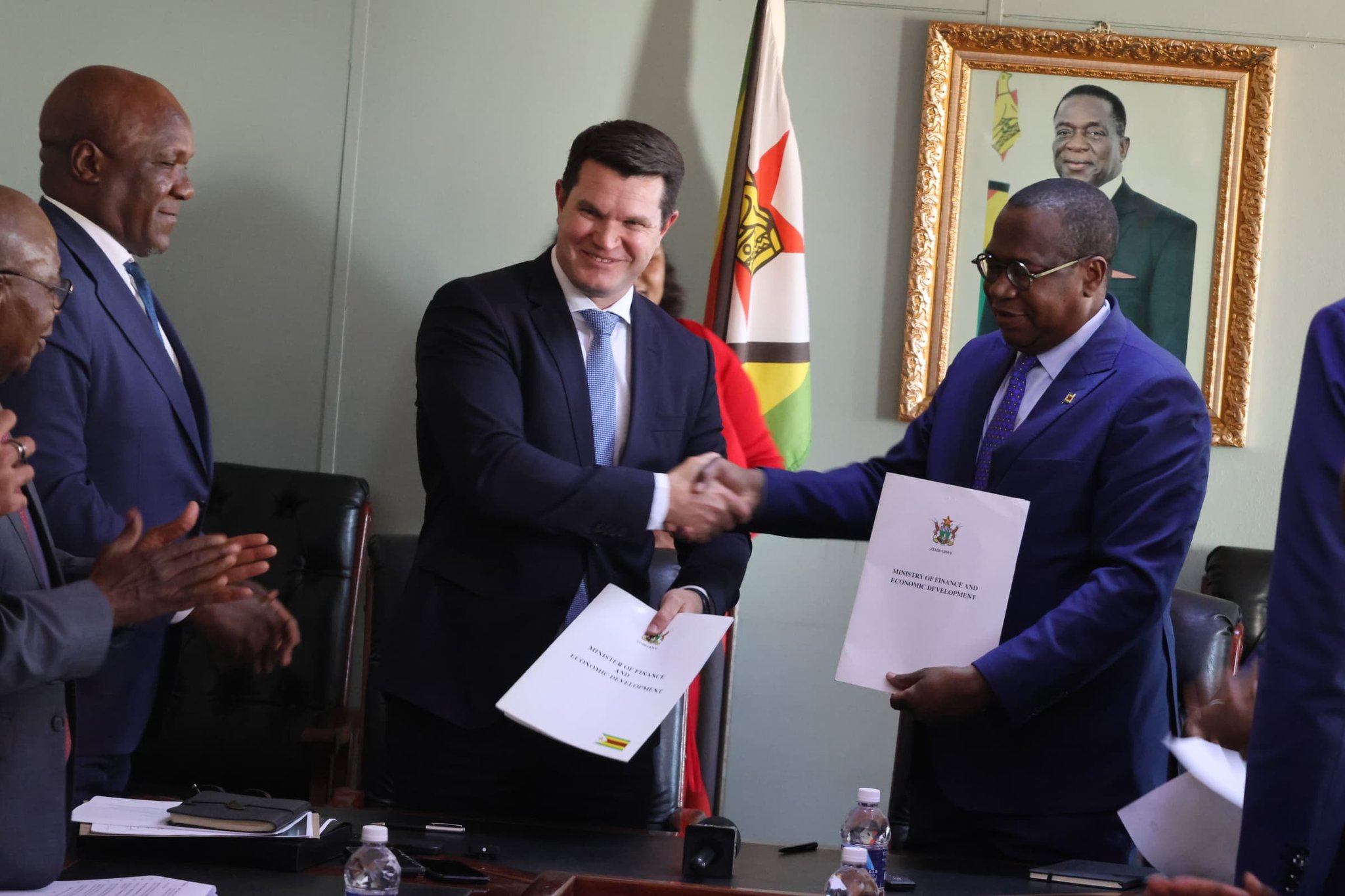
The Government of Zimbabwe has signed a Petroleum Production Sharing Agreement (PPSA) with GEO Associates for petroleum exploration and potential production under Special Grant 4571 in the Cabora Bassa Basin, a move authorities say could strengthen the country’s long-term energy security and reduce dependence on imported fuel.
Speaking at the signing ceremony, Mthuli Ncube described the agreement as a key milestone in advancing Zimbabwe’s ambitions to unlock value from its natural resources and attract investment into the energy sector.
The deal comes as Zimbabwe continues to grapple with energy shortages and heavy reliance on imported petroleum products, which have left the economy vulnerable to global price fluctuations and supply disruptions.
Minister of Energy and Power Development, July Moyo said the Cabora Bassa Project holds significant promise for the country’s energy future.
“The Cabora Bassa Project has the potential to play a pivotal role in strengthening Zimbabwe’s long-term energy security while supporting industrialisation and sustained economic growth,” Moyo said.
He said domestic gas development presents an opportunity to diversify Zimbabwe’s energy mix, reduce dependence on imported fuels, and support future electricity generation and industrial expansion.
“Domestic gas development represents a significant opportunity to diversify Zimbabwe’s energy mix, reduce reliance on imported fuels, and underpin future power generation and industrial initiatives,” he said.
According to Moyo, the signing of the PPSA provides the legal and operational framework needed to speed up development activities and move the project closer to commercialisation.
“The execution of the Petroleum Production Sharing Agreement provides the certainty and framework required to accelerate development activities and advance towards commercialisation,” he said.
Moyo also highlighted the potential role of domestic petroleum production in insulating Zimbabwe from international market shocks.
“Importantly, the PPSA will also reinforce Zimbabwe’s fuel sector by reducing exposure to global supply chain disruptions and geopolitical shocks, ensuring that domestic production cushions the economy against international price volatility and enhances resilience in fuel security,” he added.
While government has projected economic benefits from the project, including energy diversification and industrial growth, the success of the Cabora Bassa venture will ultimately depend on exploration outcomes, commercial viability, and the pace of implementation.
The agreement signals renewed momentum around Zimbabwe’s oil and gas ambitions, with expectations that successful development could reshape the country’s energy landscape and reduce its dependence on imported fuel.