
Author: Pretty Chavango

  • “We Must Create Our Own Local COPs” – MP Pushes for Homegrown Climate Framework

    “We Must Create Our Own Local COPs” – MP Pushes for Homegrown Climate Framework

    April 10, 2026

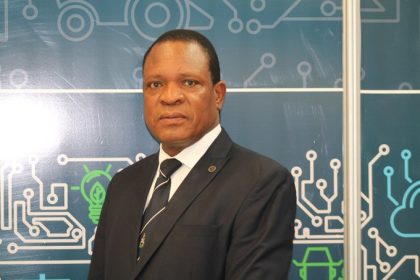
    Bindura South legislator Remigious Matangira has called for the establishment of domesticated climate coordination platforms, proposing what he termed “local COPs” to strengthen Zimbabwe’s response to climate change.

    Hon. Matangira made the remarks while commenting on a report of the Delegation to the 58th Plenary Assembly Session of the Southern African Development Community Parliamentary Forum, held in South Africa .

    The report focused on “The Impact of Climate Change on Women and Youth in the SADC Region and the Role of Parliaments in Climate Change Mitigation and Adaptation.”

    In his contribution, Hon. Matangira said Zimbabwe’s continued participation in global and regional climate platforms must be matched by stronger domestic coordination mechanisms that reflect local realities.

    “We have attended countless global climate conferences, but it is about time that we come closer to home and domesticate interventions around climate change and its impacts,” he said.

    He proposed the creation of national “local COPs”, describing them as structured platforms where government ministries, lawmakers, and stakeholders converge to coordinate climate action more effectively.

    Hon. Matangira said such a mechanism would help address what he described as fragmentation in the country’s current climate response system.

    “It is important for us across ministries to converge on this very important existential matter of climate change. I get the sense that we are too scattered and fragmented in the way we are addressing it,” he said.

    He argued that climate change requires a whole-of-government and whole-of-society approach, given its cross-cutting impact on development, livelihoods, and ecosystems.

    Hon. Matangira also highlighted the importance of aligning domestic action with continental frameworks such as the Kampala Declaration, which will guide African climate action from 2026 to 2035.

    He further urged policymakers to ensure that climate frameworks are grounded in local realities and aligned with Zimbabwe’s National Adaptation Plan. In addition, the legislator called for stronger integration of indigenous knowledge systems with modern scientific approaches, particularly in environmental management.

    “How do we get our village science to converge with conventional science?”

    Matangira noted that traditional practices have historically played a key role in protecting ecosystems such as wetlands and forests, and should be incorporated into modern climate governance systems.

    At the same time, pointing to emerging technologies such as Artificial Intelligence as important tools for climate forecasting and adaptation planning – combining indigenous knowledge, scientific research, and technological innovation to strengthen Zimbabwe’s ability to anticipate and respond to climate risks.

    Hon. Matangira also called for the inclusion of traditional leaders and local communities in climate governance, particularly in environmental protection efforts.

    The intervention comes as Southern African countries continue to face increasing climate-related shocks, including droughts, water stress, and ecosystem degradation, with women and youth disproportionately affected, according to the SADC PF report under discussion.


  • CNRG petitions Parliament over Boterekwa mining activities

    CNRG petitions Parliament over Boterekwa mining activities

    April 2, 2026

    by Pretty Chavango

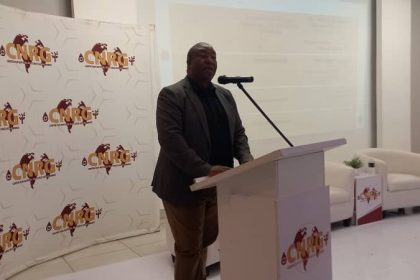
    Centre for Natural Resource Governance CNRG Zimbabwe has petitioned the Parliament of Zimbabwe to urgently intervene in the alleged environmental destruction and human rights violations linked to mining activities in Boterekwa, Shurugwi.

    The petition, submitted in line with Sections 59 and 149 of the Constitution, reflects growing concerns from local communities who say they are bearing the brunt of unregulated and harmful extractive practices.

    According to CNRG, mining operations in the Boterekwa area have reportedly failed to comply with environmental and legal standards, despite the presence of regulatory bodies such as the Ministry of Mines and Mining Development and the Environmental Management Agency.

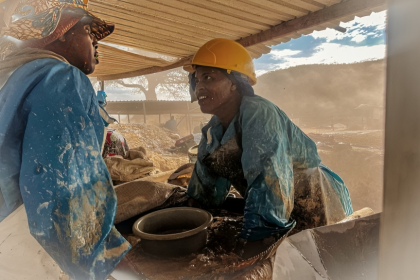
    Communities have raised a range of concerns, including severe environmental degradation, loss of biodiversity, and hazardous dust pollution that is reportedly contributing to respiratory illnesses. The unsafe use of cyanide and other toxic chemicals has also been flagged, alongside contamination of water sources such as the Mutevekwi River with heavy metals.

    Residents further allege that blasting activities from mining operations have caused structural damage to homes, raising both safety and livelihood concerns.

    “These violations are not just environmental, they are a direct assault on community dignity, health, and livelihoods,” CNRG said in a statement, adding that Zimbabwe’s Constitution mandates that natural resources should benefit citizens rather than harm them.

    The petition urges Parliament to exercise its oversight role by investigating the reported violations, enforcing compliance with environmental and cultural protection laws, and ensuring compensation for affected households.

    It also calls for stronger regulation of artisanal mining and immediate measures to protect public health and the environment.

    CNRG said the petition forms part of broader efforts to promote accountability and transparency in Zimbabwe’s extractive sector, where communities often face environmental damage and rights violations linked to mining activities.

    The organization has urged lawmakers to act decisively and in the public interest to address what it describes as “rampant unsafe mining practices” in the Boterekwa mountain range.

  • Severe Rains Cut Off Access to Mana Pools National Park, Exposing Climate Vulnerabilities

    Severe Rains Cut Off Access to Mana Pools National Park, Exposing Climate Vulnerabilities

    March 29, 2026

    Heavy rains in the Zambezi Valley have left parts of Mana Pools National Park inaccessible, highlighting growing concerns over climate-driven damage to critical infrastructure in protected areas.

    The rains, described as severe, have damaged major access roads and partially destroyed the Rukomechi Bridge, a key link into the park. Authorities say most routes are now impassable, effectively cutting off one of Zimbabwe’s most significant conservation and tourism sites.

    While seasonal flooding is not new to the Zambezi Valley, the scale and impact of recent rainfall events are raising questions about whether infrastructure in fragile ecosystems is keeping pace with intensifying weather patterns linked to Climate Change.

    Mana Pools sits in a floodplain ecosystem that depends on natural river cycles. But when extreme rainfall overwhelms roads and bridges, it disrupts not only tourism but also conservation operations , including anti-poaching patrols, research, and emergency response.

    The damage comes at a time when Southern Africa is experiencing more unpredictable weather patterns, swinging between droughts and intense rainfall — a pattern scientists increasingly associate with climate change.

    For local economies that depend on tourism, prolonged inaccessibility could mean lost income for guides, lodges, and surrounding communities. For conservationists, it raises a deeper concern: how resilient are protected areas to climate shocks?

    The situation at Mana Pools is not just about a damaged road. It is a signal of a broader challenge, adapting conservation infrastructure to a changing climate while protecting the ecosystems it is built within.


  • Lives Lost in Zaka Expose Gaps in Zimbabwe’s Disaster Response System

    Lives Lost in Zaka Expose Gaps in Zimbabwe’s Disaster Response System

    A tragic incident in Zaka South has reignited calls for urgent reforms to Zimbabwe’s disaster preparedness systems, after two men lost their lives while awaiting rescue for nearly 12 hours.

    Speaking in Parliament, Hon.Clemence Chiduwa , MP for Zaka South urged the government to prioritise funding and resourcing of the Civil Protection Unit (CPU) and the Rural Infrastructure Development Agency (RIDA), particularly at district and provincial levels.

    12 Hours Clinging to Survival

    The incident occurred on 12 March 2026 along the Mutirikwi River, where three people, including a pregnant woman, were stranded after their makeshift boat capsized.

    With no immediate rescue capacity at the district level, victims were left clinging to tree trunks and shrubs for close to 12 hours.

    Two men, identified as Cliff Chikara and Brighton Rugwevera, died before help arrived, while the pregnant woman survived.

    According to Hon. Chiduwa, the delay was caused by the lack of essential rescue equipment within the district Civil Protection Unit, forcing authorities to dispatch a specialised sub-aqua rescue team from Zvishavane, which cost critical time.

    Poor Infrastructure Slowed Rescue Efforts

    The situation was worsened by impassable roads, which delayed rescuers by an additional three hours.

    This, the legislator noted, highlights ongoing challenges faced by RIDA, including limited machinery, inadequate funding, and slow road and bridge rehabilitation, all of which continue to hinder emergency response efforts.

    A National Warning, Not a Local Tragedy

    Hon. Chiduwa described the incident as more than an isolated tragedy, calling it a “national warning” about Zimbabwe’s readiness to respond to climate-induced disasters.

    He warned that delayed responses are costing lives and stressed that institutions without adequate tools cannot effectively save people in emergencies.

    With climate change increasing the frequency of floods and extreme weather events, pressure is mounting on governments to strengthen first-response systems at local levels.

    Call for Investment in Disaster Preparedness

    The legislator called for increased funding for district and provincial CPUs, the provision of essential rescue equipment, and stronger support for RIDA through improved access to machinery and financial resources to enable timely road and bridge rehabilitation.

    He emphasised that investing in this critical infrastructure would significantly improve Zimbabwe’s ability to respond to climate-related disasters and protect lives.

    Government Response: Focus on Communication Systems

    Responding to the concerns, the Speaker of Parliament of Zimbabwe emphasised that coordination, rather than equipment alone, is a key gap in the current system.

    He highlighted the need for widely publicised emergency hotlines and faster communication between districts and national authorities.

    According to the Speaker, once alerts reach central command, military helicopters are ready to respond, as demonstrated during past disasters such as Cyclone Idai and flooding in Tsholotsho.

    The Bigger Picture

    The Zaka tragedy underscores a critical tension in Zimbabwe’s disaster response strategy: the balance between local capacity and national coordination.

    While national resources may exist, delays at the local level, where disasters first strike, continue to cost lives.

    As climate risks intensify, the question remains whether Zimbabwe can continue to rely on centralised response systems, or whether greater investment in local preparedness is now unavoidable.