Zimbabwe could be heading toward another dry agricultural season, after the Zimbabwe Meteorological Services Department (MSD) issued a preliminary warning indicating a high probability of an El Niño event during the 2026/27 rainy season.
In a press statement, the Zimbabwe Meteorological Services Department said global climate forecasting centres are currently showing an 88% to 94% likelihood that El Niño conditions will develop in the upcoming season.
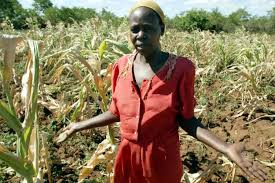
If realised, the phenomenon is expected to significantly influence rainfall patterns across Zimbabwe, with historical data suggesting a 65% chance of below-normal rainfall during El Niño years. Such conditions are often linked to delayed rains, shortened wet seasons, and drought stress affecting agriculture and water resources.
However, the department cautioned that the forecast remains preliminary, noting that early-year projections are affected by what scientists describe as a “spring predictability barrier” a period when atmospheric and oceanic conditions are highly unstable and can shift substantially before the season begins.
“As a result, current signals should be interpreted with caution,” the MSD noted, adding that it has not yet issued its official seasonal forecast.
Final outlook expected in August 2026
The MSD said a more definitive national outlook (NACOF) will be released in August 2026, following regional climate discussions under the Southern African Development Community Climate Outlook Forum (SARCOF).
The updated forecast will incorporate more recent climate data to guide national planning across key sectors, particularly agriculture, water management, and disaster preparedness.
Call for early preparedness, not panic
Despite the uncertainty, the MSD has urged farmers, institutions, and the public to begin gradual preparedness measures while avoiding panic-driven decisions.
“Stakeholders are advised to continue with normal seasonal preparations while beginning to adopt climate-resilient practices,” the department said.
Recommended measures include strengthening water conservation strategies, adopting drought-tolerant seed varieties, and enhancing adaptive agricultural planning ahead of the rainy season to better prepare for potential climate variability and reduce vulnerability to drought conditions.
The department also stressed the importance of relying on official updates only, warning against acting on unverified climate projections circulating ahead of the formal forecast.
Climate uncertainty remains high
While early indicators suggest a strong possibility of El Niño conditions, meteorologists emphasise that seasonal forecasting at this stage remains probabilistic rather than definitive.
El Niño events in southern Africa have historically contributed to significant agricultural losses, but experts say impacts vary depending on intensity, timing, and local mitigation efforts.
For now, authorities are maintaining close monitoring of evolving ocean-atmospheric patterns as Zimbabwe prepares for the 2026/27 rainfall season.