
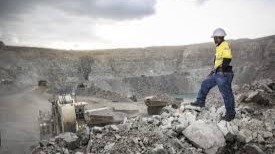
The Government of Zimbabwe has reaffirmed that the ban on exporting minerals in raw ore form remains firmly in place, positioning value addition and beneficiation as central to the country’s economic transformation strategy.
Information, Publicity and Broadcasting Services Minister Soda Zhemu said the policy is not limited to lithium but extends across all minerals, underscoring a decisive shift away from extractive exports toward industrial processing.
“The ban is still in effect, not only for lithium, but for all mineral exports in ore form. Government’s position is that minerals have to be beneficiated, value has to be added, and jobs must be created in the process,” said Zhemu.
The renewed stance comes as Cabinet approved a comprehensive Minerals Value Chain Framework presented by Vice President Constantino Chiwenga, aimed at tightening compliance and maximising returns from the country’s mineral wealth.
Minister Zhemu acknowledged that the government is aware of revenue losses incurred since the export ban was introduced but maintained that the long-term benefits of beneficiation far outweigh the short-term trade-offs.
“We are aware that there is potential revenue that has not been earned from the time the ban was effected, but we continue to encourage our investors to follow the beneficiation route because this is the route that will earn our country more revenue,” he said.
“We are also aware that by the time investors embark on serious value addition and beneficiation, a lot of jobs will be created and more taxes earned.”
Using lithium as a key example, Zhemu illustrated the economic gap between raw exports and processed minerals, noting that a tonne exported in ore form earns around US$2,000, while the same tonne, once beneficiated to battery grade, can fetch up to US$30,000 on the international market. He expressed confidence that the country will recover any foregone earnings once companies comply with beneficiation requirements and the ban is eventually lifted under a more structured regime.
The new framework introduces stricter enforcement mechanisms to support this transition. Government plans to establish local laboratories to test and validate minerals before export, ensuring compliance with value addition standards. These facilities, anchored by institutions such as the University of Zimbabwe, are expected to reduce reliance on foreign certification while strengthening domestic oversight.
In addition, authorities are rolling out a real-time “mine-to-market” tracking system designed to monitor mineral flows from extraction points to export destinations. The system is intended to close loopholes that have historically enabled smuggling, under-declaration, and revenue leakages within the sector.
Beyond revenue retention, the government sees beneficiation as a pathway to industrialisation, job creation, and increased tax contributions. By compelling investors to process minerals locally, Zimbabwe aims to build a more resilient mining sector that contributes meaningfully to economic development rather than simply supplying raw materials to global markets.
While the policy direction signals strong intent, its success will depend on how quickly infrastructure, energy supply, and investor readiness align with government expectations. For now, authorities remain firm that exporting raw minerals is no longer an option, as Zimbabwe seeks to capture greater value from its natural resources and reposition itself within global mineral value chains.